

What drives Americans to leave home and settle elsewhere? That question has been on my mind for many years. This series, Leaving America, seeks to uncover the multitude of reasons and lessons learned—beginning with Americans in and around Paris. Become a paid subscriber to access this newsletter’s archives.
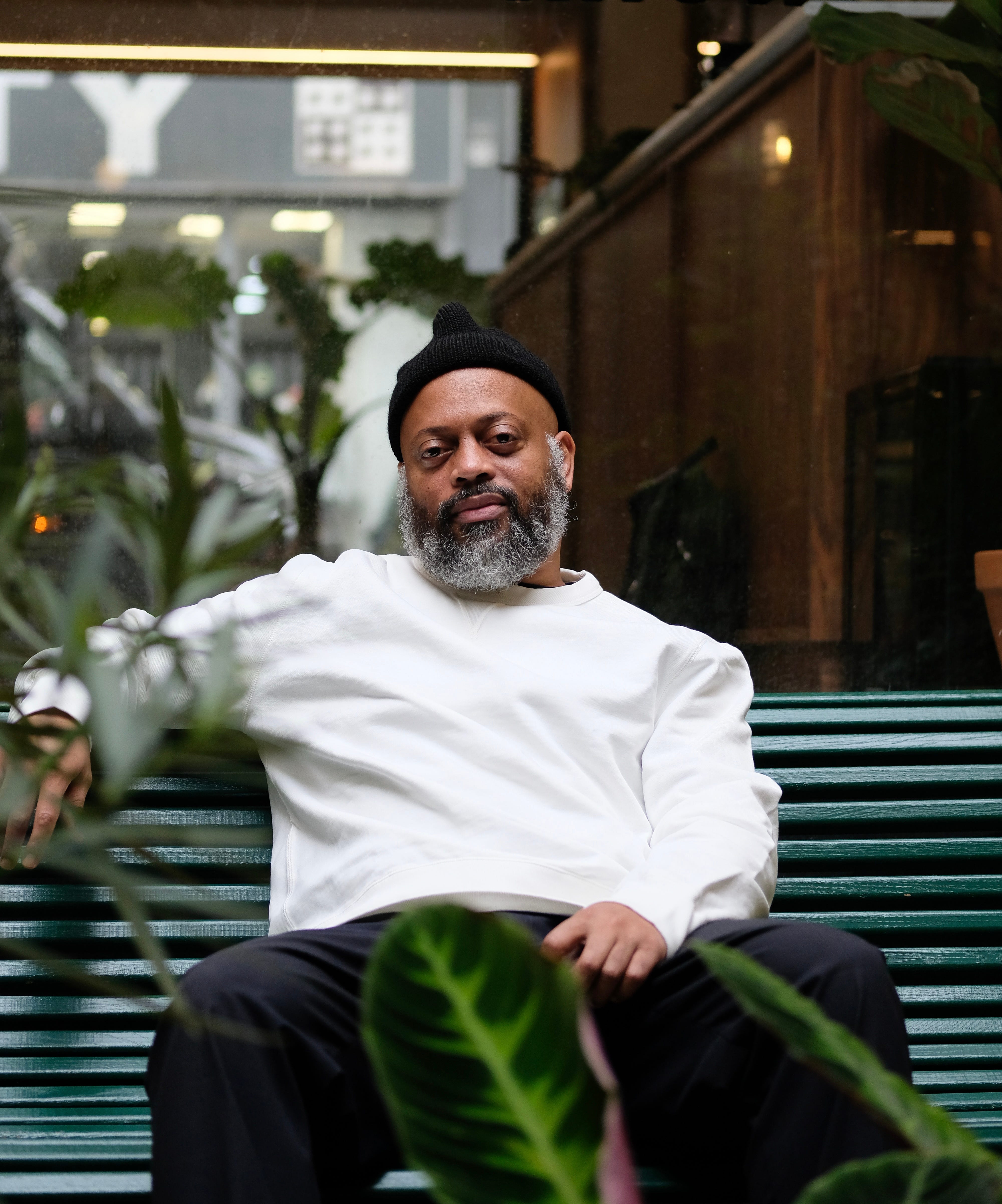
I don’t know how many Americans living abroad came for a short-term trial and found themselves here a decade or more later but I’d wager it’s a significant chunk of us. I met Jim Browski, a photographer, many years ago at a coffee shop (quelle surprise!), bonded over our Philly origin stories, and stayed connected online ever since. But until now, I didn’t know his full U.S.-to-France story— it began in 2013 and wasn’t meant to be permanent and yet, more than a decade later, he’s thriving in Paris. (Go Birds.)
Where was the last place you lived in the U.S.?
Palo Alto, CA.
Did you intend to leave permanently or was the move temporary?
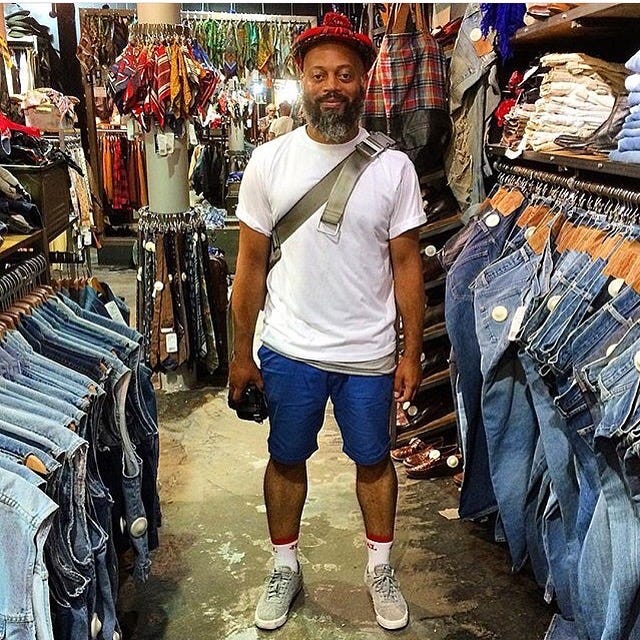
I moved from Philly to Palo Alto for work. I was in tech and HQ was in San Jose. After about two years, the company expanded to Amsterdam and asked if I’d be interested in helping to smooth the transition and move for a year. You had me at hello! The year went by fast. I had the opportunity to extend by another year, so I obviously jumped on that. But in my mind, I was always going to have to return, and as a result, I made the most of every single day. Since Amsterdam is a small city attracting tons of expats and tourists, I documented people on the streets as a memoir of sorts. The fashion I was exposed to there was so different from what I was used to. I did a whole bunch of street photography, went to as many events as possible—I was OUTSIDE!
I met a whole lotta people and through that, got connected to people who worked for an American giant in the footwear industry. This company turned out to be interested in my photography and connections to ‘the streets’. We started talking, they decided to ‘just do it’ (pun intended), offered me a job, and I made the switch. I worked with them for a couple of years and then was offered an opportunity to do something similar in Paris for a French brand.
I moved, did that for another couple of years as a freelancer for the first time, and gradually got more exposure for my photography work. I had to learn how to adapt to a different type of professional dynamic in Paris. As a photographer, your portfolio can demonstrate how well you know your stuff but a potential client is more interested in whether they like you and your style. It was tough getting a look; I ran into countless ‘we have no budget but it would be great exposure’ conversations and it was frustrating to me because, at the same time, I was being booked for paid work in other European cities. This finally changed when I found myself booked for a photoshoot for Vogue Australia; that’s when the majority of the previous conversations in Paris changed and I started getting more opportunities for actual paid work over here, too.
Was there a pivotal moment when you knew your life would be best pursued elsewhere?
Ever since moving, I almost always had one year contracts so I was always sort of prepped to go back. My focus was to get the most out of my time for however long as it lasted. That mindset stuck with me until I moved here and was a couple of years in, getting a better grasp of Paris dynamics. It was here that I noticed being American, at least in my field, could come with some privileges. It became clear some clients booked me not only because they trusted my work but because being able to show they worked with an American photographer, especially in behind-the-scenes content, could give them an additional flair. So I’m not sure about a pivotal moment but as someone looking the way I do, privileges like these don’t come around like that often so I’ll take it.
What sort of financial consideration did the move require, even if as a student initially? Does one need a plump savings account to make this work?
Again, my move was never that intentional and I definitely didn’t make plans for a more permanent stay. When I moved, I knew housing was taken care of and I had a contract. At the time, that was all I needed to know—it was gonna be an experience. Now, had I been in my current situation as a freelancer and moved straight to Paris... that would’ve been another story. Housing, in particular, is a huge challenge. If you don’t know anyone in the city who can introduce you to someone renting out their place, you’ll likely need to work with a real estate agency which isn’t cheap. Then, depending on your financial situation, you either need a guarantor or be able to pay as much as six months rent upfront. Yeah… that would have been a much different story for me.
At what age did you leave? Looking back, was that too soon or too late?
I was 24 and I think it was the perfect time. I had some work/life experience in a different state and then got to experience that same thing in a completely different country. Had my personal situation been different, for example had I been in a relationship at the time, maybe this would’ve gone a different way. Who knows?
When did you know you'd made the right [or wrong] call?
Immediately. I’m going to sound like a broken record but I never really planned ahead. All I knew was I’m a Black Man and the majority of people around me had never had the opportunity to leave the country. Even if this decision had just been for a year, as it was intended to be, it still would’ve been an incredible experience that not many people like me get.
What does Paris offer you that your native home couldn’t and, perhaps, still can’t?
To be honest what first comes to mind is safety. There’s a lot to be said about Paris but over here, in general, I don’t stress too much about getting shot in a case of mistaken identity. With that comes an enormous amount of survivors’ guilt, too. Beyond that, Paris has introduced me to a tremendous cuisine, a great healthcare system, some amazing architecture and incredible light for photography.
Can you share any anecdotes about your highest and lowest moments in Paris?
A funny moment: I literally had just moved here—I’m talking five days in or something. It was a Friday evening. A friend and I went to have drinks and meet up with some of his friends. We had a great night, got to talking to two girls and we had some drinks. When the bar closed, I suggested having some more drinks at my place. Again, I had only just moved so I stocked up on groceries but hadn’t yet planned to entertain. When I moved in, I saw that the landlord had left a bottle of wine in the kitchen. So we get back to my place, I open the bottle and start pouring. One of the girls comes into the kitchen to help me carry glasses and gives me a look when sees me pouring. “What are you doing!?” she asked, cracking up. Please learn from my mistake: wine is ‘vin’ in French. What I saw was a bottle of red with the word ‘Vin’ BUT THERE WERE SOME OTHER WORDS ON THERE TOO— Vinaigre du Vin Rouge! A wine-based vinegar. I almost served that to my guests. Thank goodness for corner shops that sell wine!
A low one: one of my British colleagues was in town for the weekend with his fiancée. He asked me for dining recommendations and I told him to go check out this Cambodian place. That restaurant, Le Petit Cambodge, ended up being one of the places targeted during the November 13 attacks in 2015. They were there when it started but, thankfully, got away unscathed. I don’t even want to think about if that had gone another way.
Are there aspects of American life that you long for?
I’ve been in Europe for such a long time, I don’t necessarily want to say I ‘long’ for anything but Thanksgiving dinners are missed. I often get the opportunity to go back home for that and those dynamics are just great. I’ve been to a few Thanksgiving dinners in Paris as well but it’s not the same.. nor should it be.
Whenever I go back I also appreciate the number of options we have at supermarkets but that might be coming from a place of nostalgia. And speaking of nostalgia… Ishkabibble’s cheesesteaks on Southstreet— now THAT I do long for.
What book or movie do you most associate with the American experience abroad?
Ronin! Aside from an incredible cast and storyline, Ronin is filmed in a few locations all over France; Paris in particular. The opening scene is in Montmartre and all these years in, every time down I walk by those stairs, I have to stop. Ronin is on my mind. Then there’s this nerve-racking scene at Pont Alexandre III with a chase. The city of Arles also plays a big part in this movie and I’m not afraid to admit, Ronin is the primary reason I visited that city which I know is blasphemous coming from a photographer.
If you had to narrow it down to one, what is the greatest lesson living abroad has taught you about yourself and the world?
Adapt. Paris isn’t the only European city I’ve lived in but adapting goes for any city. Moving solo and trying to get into social circles, learn local traditions and attitudes, gain experience, can feel rough; Americans are used to a different type of socializing. The first instinct might be to flock to other Americans. That’s fine but to truly understand this culture and why things are the way they are, you do have to try to adapt. I can’t speak for the whole of France but in Paris, specifically, there’s some unspoken rules on socializing—just walking up to someone and engaging in small talk might not work. But you can’t let that deter you because you will break through eventually and when you do, it’s that much easier to get introduced to other people and social circles. It’s worth it.
Have you ever considered going back? (Why or why not)
Honestly, I obviously love going back for my momma, to see some friends and experience some America-specific things but it always just feels like a visit. The social dynamics have always been more in-your-face than in Europe and given the way things are right now, I don’t necessarily consider going back. Life’s been unexpected for me in many ways so it’s not a definitive NO but I just don’t see things changing so much that going back will appeal to me.
For those contemplating leaving the U.S., what do you suggest they consider most about the decision?
Don’t leave just to escape the way things are now back home. Many of those sentiments are bubbling up all over the globe—maybe in less profound ways but they’re still there. If you want to leave and have the opportunity to do so, it should be for the exposure to and learning from other cultures and experiencing a different quality of life.
For people from Black and Brown communities in particular—leaving will absolutely expose you to survivors’ guilt in some way. Your friends and family might be looking at you a certain way and you’re probably going to feel a lot of emotions around this, especially if their situation has deteriorated while you’re doing okay. It’s a real thing and you need to prep for that.
Click here to read all previous Leaving America questionnaires. If you think a friend would enjoy The New Paris Dispatch, gift subscriptions are available here.
Philly 🦅 pride! So cool to hear how his career changed from following what he loved and getting out and talking to people.
Reading the questionnaires has been fascinating, and each person profiled has really provided a lot of insight into the expat experience. Thanks to each one for sharing their life story so candidly, and to you for initiating this series.