
Thoughts on the solar eclipse, summer, and a climate in crisis
Feeling awe and the inconvenient trio of grief, concern, anger in a changing France

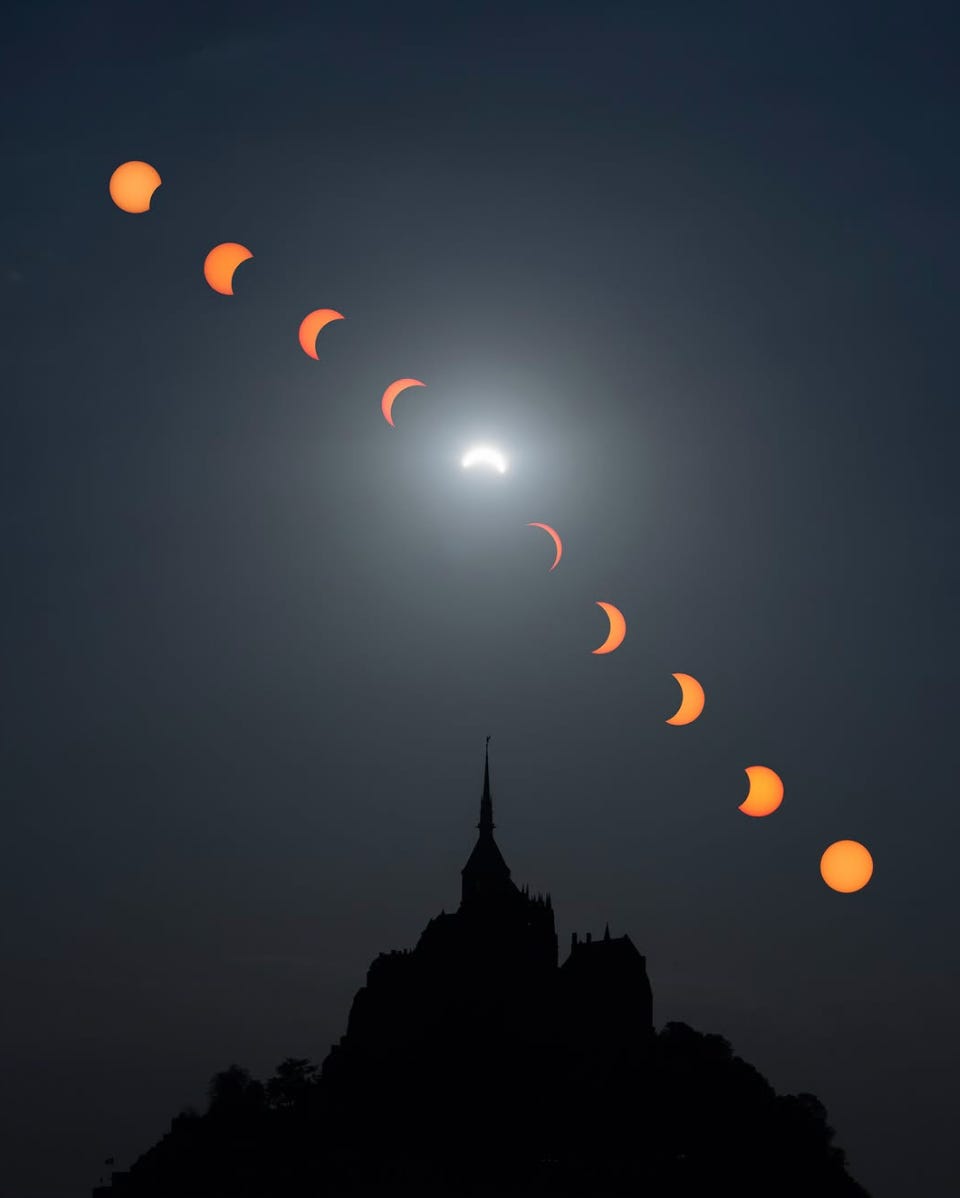
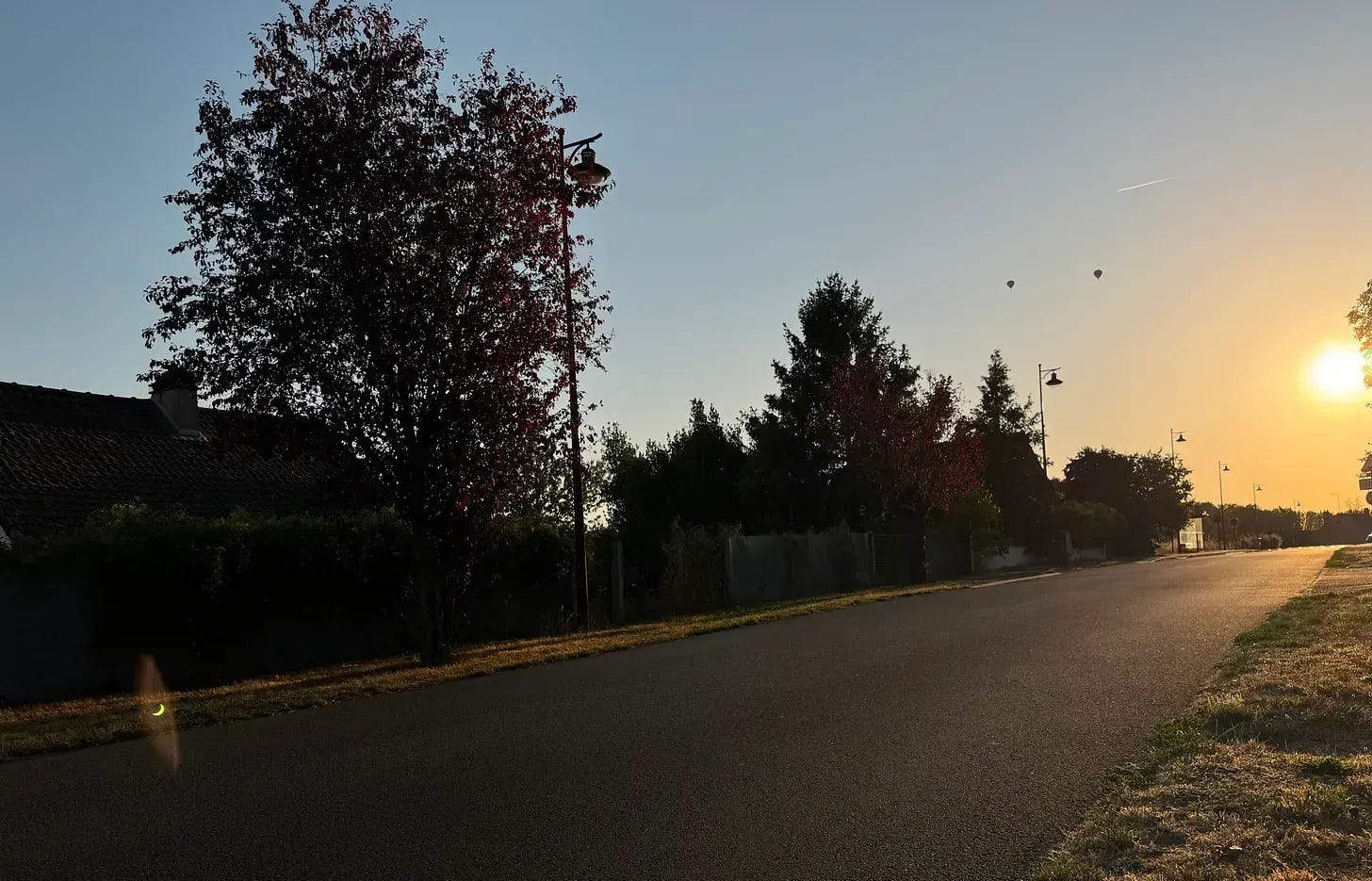
Last night, my husband and I made an early dinner and set out to find the right spot to take in a phenomenon that hadn’t been experienced in Europe since 1999. We didn’t have to venture far: we’ve been out at our house for the last couple of weeks. We couldn’t catch it all from home— too many trees— but plenty of open fields and clear horizons at the other side of the village. I expected to cross paths with more locals, or at least hear them, but it was just us, sat on an oddly low and stout concrete bench at the edge of the village, and a man who trudged out of his garage in socks and Birks and slipped on a welder’s hood. “It works just the same,” he told us after oohing and aahing at the sun. Our eclipse glasses, found by chance at the only pharmacy in Fontainebleau that still had any in stock, came on and off, on and off, from the start of the eclipse around 19:23 to 20:17 when it was as full as it was going to be for us in Ile de France, around 92% coverage.
The whole thing was mesmerizing but perhaps even more so was the shift in atmosphere, as the moon gradually masked more and more of the sun’s luminosity and the thick heat-wave air cooled. What we were left with was an eerie, sepia-tinged glow that turned our surroundings into what felt like a film set for ET.
This perception, I learned, is called the Purkinje effect, named for the physiologist who first observed the difference between the vibrant colors, say of red flowers against green leaves in daylight, and their more muted hue at nightfall. In low light, blues and greens become more vivid. On a normal day, this shift happens gradually and our eyes, “which use two types of light-sensitive receptors, begin to switch from using cone cells that give the brain information on what color is seen in bright light to relying on rod cells, which take over in low light and typically only pick up blue-green wavelengths well.” But during an eclipse, that process unfolds more rapidly and our eyes simply don’t have time to adjust. That faded, almost retro red-orange glow isn’t strictly about actual optics but rather the way our eyes interpret the light.
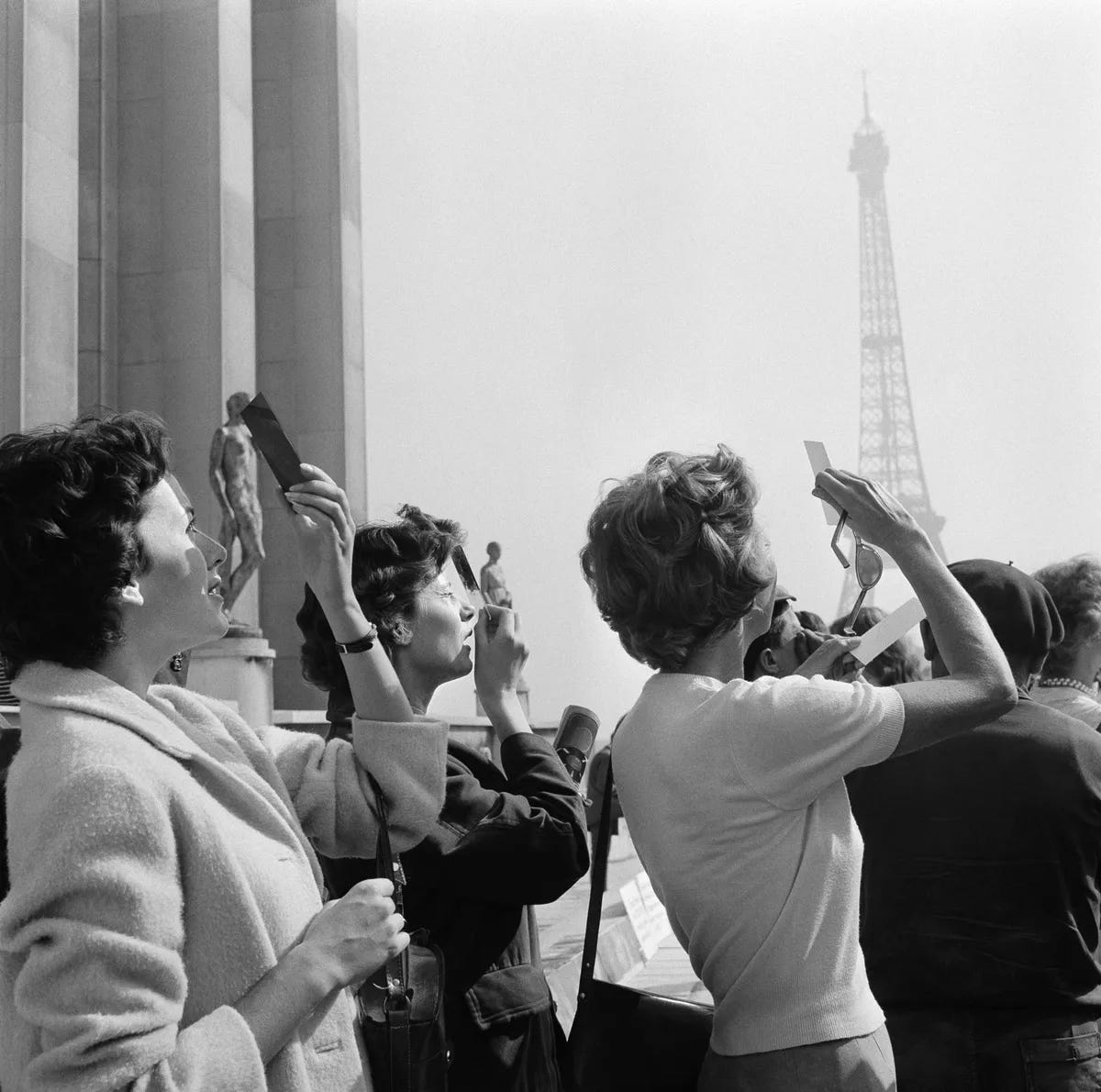
It was also a beautiful example of science in action! I’m sure some of the very people who distrust facts and scientific data were outside marveling at the eclipse which we can predict and understand… because of math and science!
Of course the real joy, even for the minimally astronomically-enthused, must have been the communal experience in big cities, on beaches, and on roadsides across Europe. It reminded me of the magic we felt during the Paris Olympics and especially, the first time we watched Mathieu Lehanneur’s cauldron lift off in the Tuileries Gardens. And it occurred to me how badly I needed to feel that awe.
It was timely that the eclipse occurred during a disastrous summer and one of great emotional distress, for me anyway, and timely that my friend Cody’s latest op-Ed addresses the state of awe. He writes that it isn’t “external so much as the dynamic experience of your mind rapidly apprehending something bigger than yourself and, say, whatever is flickering across your phone — the moment of having your understanding of the world transformed. Awe jolts us outside of our day-to-day perspective, permitting us to process new information, to adjust our mind-set, to see so much anew.”
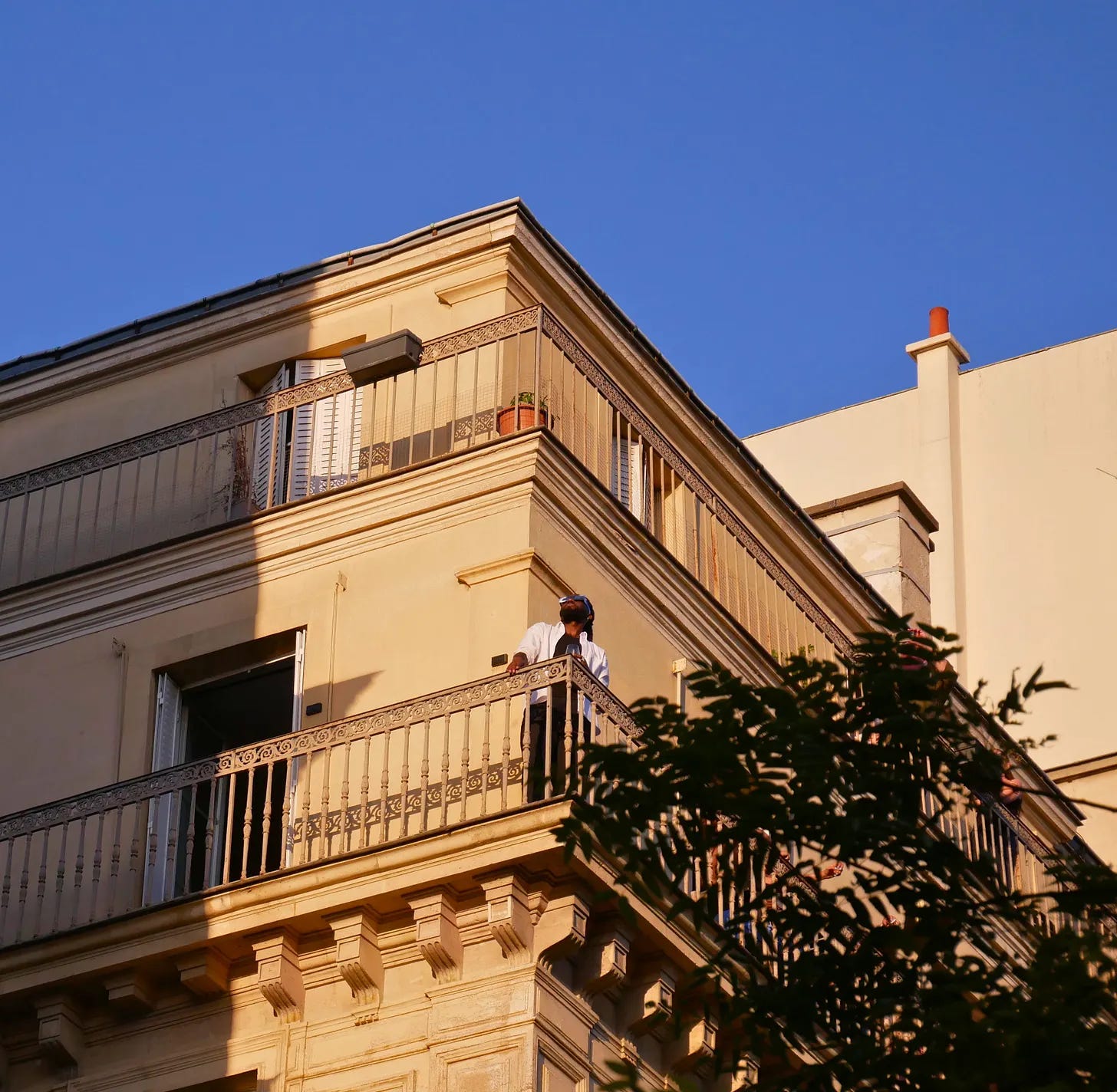
I’ve been wrestling with this week’s newsletter, struggling to find a way to appeal to what I know so many of you might want and expect — insider info! Recommendations! Analysis on this city and country we love!— but also reconcile with the fact that some of that, in this particular moment, feels tactless.
Two weeks into this break and I think I see (and accept?) that the things I recommend here are not so dissonant from my missives full of rage and grief, about our summer of climate collapse. About French politics. About world politics. About humanity. All I have been able to think about since the end of May is heat. And then fire. And then both. And then imagining what comes next, when real, sustained rain returns. Even before I left Paris two weeks ago, the streets and parks cut a melancholy figure: scorched grassland, browned and fallen leaves in an extra early false autumn, and in the occasional breeze, the crackling sound of aluminum foil still fastened to apartment windows to block the light. Rinse and repeat in cities and small towns all across France.
Forgive the expression but this was a five-alarm fire summer. I’ve cried more in the last two months than I have in a year, for experiences and lands past, those we’re losing, and those that we will no longer have in the future. I have been experiencing a mix of eco anxiety and eco-grief— which can be defined as the distress, sadness and anger felt in response to loss of ecosystems, species, humans, and ways of life, past, present and future, due to the climate crisis. (I really loved this episode of Philosopher’s Zone about this emotional state and highly recommend listening if you think you may be feeling something similar.)
Anyway, back to my dilemma: I have felt uncomfortable and uncertain about how to approach the whole pursuit of making recommendations for experiencing Paris or the rest of France when it has felt so suffocating and visibly damaged by the reality too many want to ignore. But I suppose my grief over our planet and my delight over a new bakery that an entrepreneur I know spent so much time and care building, are not dissimilar. Nobody mourns a world they don’t also enjoy. And as the very smart activists remind us, we need to find joy and awe whenever we can.
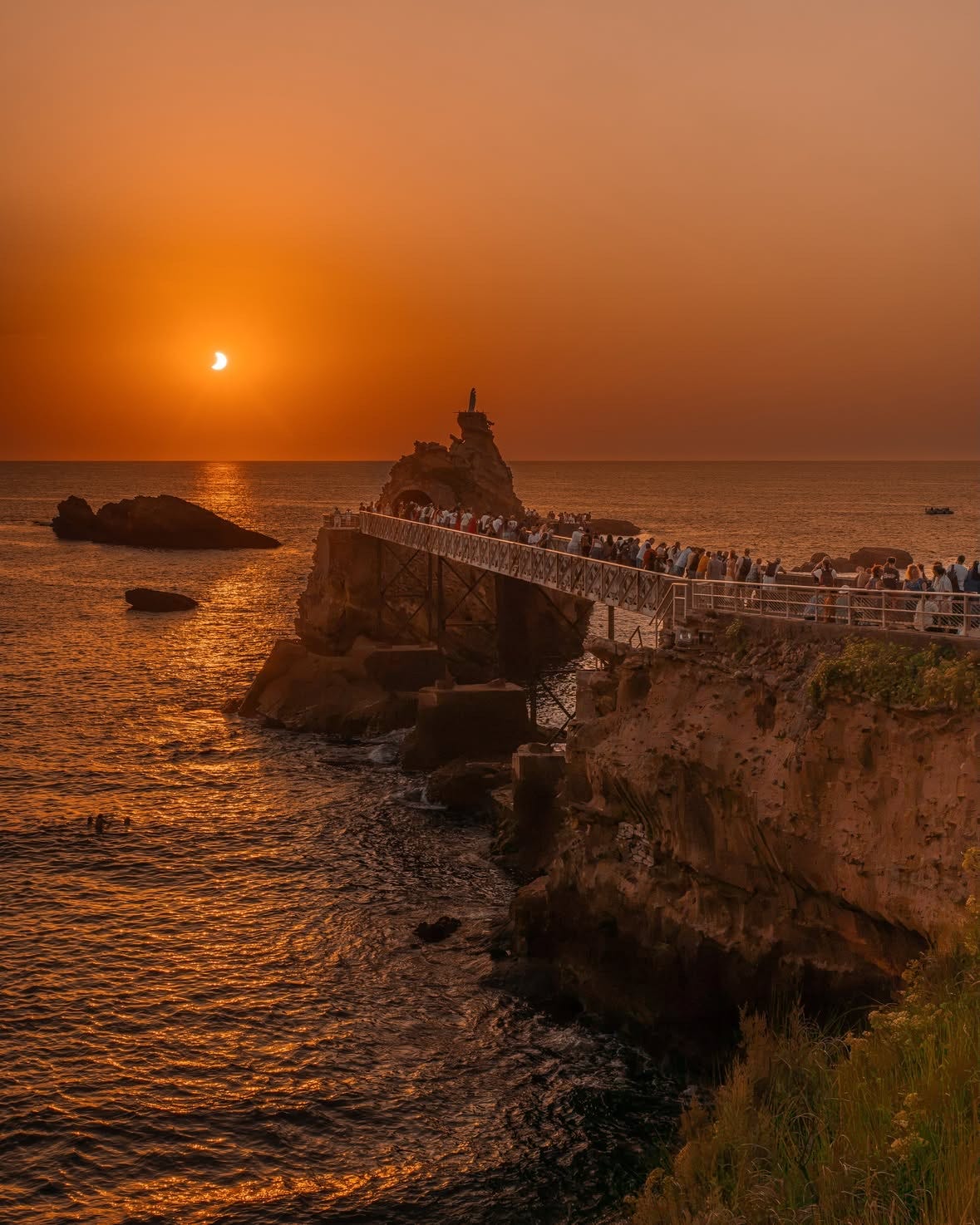
By this point in the summer, we should all be able to observe the wrath of nature across Europe— the fastest warming continent on earth— and say confidently, yep: this is unfolding as scientists predicted and we must, in response, alter the way society functions. Barring actual prison time for those responsible for this global crime, we need sanctions or carbon tax on the culprits (U.S., Saudi Arabia, Russia. China, with a caveat1), we need layered solutions, we need to instantly stop chasing growth and capital, and we need to accept sacrifices— individually and collectively.
And yet that isn’t what’s happening. We know the U.S. is backtracking on climate agreements and goals, furthering damage already done: greenhouse gas emissions in the U.S. increased by 2.4% in 2025, reversing declining emissions over the two prior years. We know concern in Europe has been high but there’s the issue of risk derailment and a lack of policy coherence between disaster risk management and climate change adaptation. We also know that those in power, even in France, have blamed their lack of urgent action on the cost of climate transition (see also: fossil fuel lobbying); they’ve blamed environmentalists (or eco-terrorists, as they’ve been called); and major media have buried the climate crisis message in the last third of their stories.
In terms of individual sentiment: if I assess based on my own algorithmic bubble on social media, I know I’m not alone in feeling despondent. So much grief, so much anger, and a clear-eyed posture about what this has been and what needs to happen. I see it everywhere but I also know I’m being shown what reassures me to see.
The other updates I see— celebrities wasting away; entitled strangers talking to camera about how much Italy, France, Fill-in-the-blank-destination sucks royally; any number of self-proclaimed gurus hawking fixes for peri-menopausal weight gain, or wrinkles, or hair loss, or adhd that they alone are apparently equipped to offer; influencers unboxing their summer wardrobes— are a jarring reality check. I suppose I should assume that behind-the-scenes, some of these individuals are as twisted into knots like I am, but clearly not enough to stop cheerleading for over-consumption. And what about some of the bright, empathetic people we all know in our networks who won’t make sacrifices or can’t bear to confront the truth about our very ill home until disaster is literally at their front door?
Psychologically, there is reason for how split we all are. Angry, not angry enough, in denial, willfully ignorant, fully grieving: the climate problem is so vast and layered that a feeling of powerlessness is understandable. The immensity of the crisis is intimidating, a hyperobject according to philosopher Timothy Morton or an apeirogon to Patrick Galey, a journalist friend who looks straight into the climate barrel with his investigations on the fossil fuel industry for Global Witness:
“To me, it is an apeirogon: something that impacts us all, in varying ways, and which excites an infinite number of perspectives even as it is - perhaps because it is - too huge and unwieldy to behold in full.” (Read more)
Wherever we are on the climate spectrum, most of us have taken some form of action. We’ve recycled, we’ve stopped using plastic straws, we’ve paid for offsets. We thought we were doing things. They are not the things that actually reduce emissions most, as data shows.
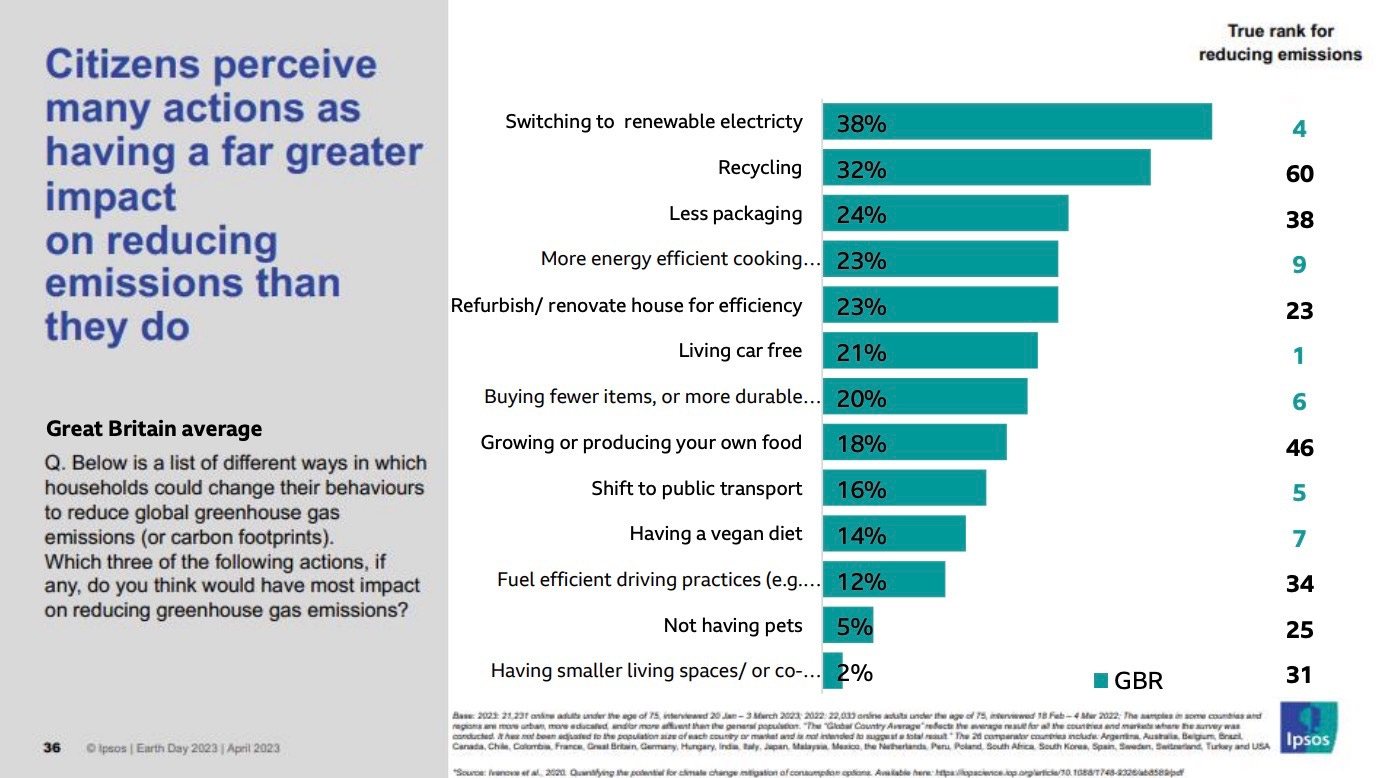
So if the eclipse was momentous for so many of us it was because it served as a reminder of everything we have right here and are actively squandering. It is crushing. As the midterms and our own French elections approach, I think the abiding question should be as simple as: do you want a planet to live on? And if so, under what conditions? Nearly every other preoccupying issue influencing our elections— wealth inequality, violence, food insecurity—is tied to or adversely impacted by the climate. It’s all interconnected.
In France, eight months from the first round of the Presidential election, we’re already up against disinformation campaigns from foreign entities, constituents who misunderstand the system and/or vote against their own interests, even when their homes are being destroyed by floods and fires directly resulting from climate disruption, and candidates who lead with promises of a simple fix when there isn’t one. As I shared in this post mid July, the week of the Fontainebleau fires, we cannot allow ourselves to forget these facts nor the feelings we’ve had all summer. Not when the rain comes, and not when the grisaille returns. And if those around us brush it all off, it’s incumbent upon us to remind them.
Here’s what I’m wondering, less than 24 hours after the joys of the eclipse: had I known or anticipated, in the self involved years of adolescence, the loss we’d all face in our futures — eroding lands, irregular seasons, fires that char the earth we claim to love and floods that drown it— would I have enjoyed nature more? Would I have relished the blizzards that kept us home from school and more closely studied the riot of autumn colors that fairly reliably made their appearance in late September in my corner of Pennsylvania?
We’re all faced with the knowledge of what is happening to the places we hold dear and yet we struggle to honor their gifts and fight for their protection. May the eclipse, or some everyday feat of nature wherever you are, bring that obligation into sharp focus.
Coal-fired power generation fell in China and India for the first time since the 1970s— The Guardian. China’s radical investment in renewables is dominating the global market.
You’ve articulated so well what I’m feeling, and so many others. I also struggle with how to reconcile my career with my values wrt the planet. xx
Thank you for your reflections, Lindsey. I moved to Paris to become an independent educator (my area is climate literature) and now am living through the hottest summer of my life. My writing and teaching have taken on a whole new urgency and meaning. The eclipse did feel like the opening scene of a thriller film (it was also beautiful, because Paris is beautiful). I hope you are staying safe in the heat, it definitely exacerbates my chronic pain!